
ORBI: How We Designed a 3D-Printed Ambient Lamp
INTRODUCTION More than just a lamp. A lamp can do more than illuminate a room. It can influence how a space feels, create a sense of comfort and become an object…

INTRODUCTION
More than just a lamp.
A lamp can do more than illuminate a room. It can influence how a space feels, create a sense of comfort and become an object worth noticing even when the light is switched off.
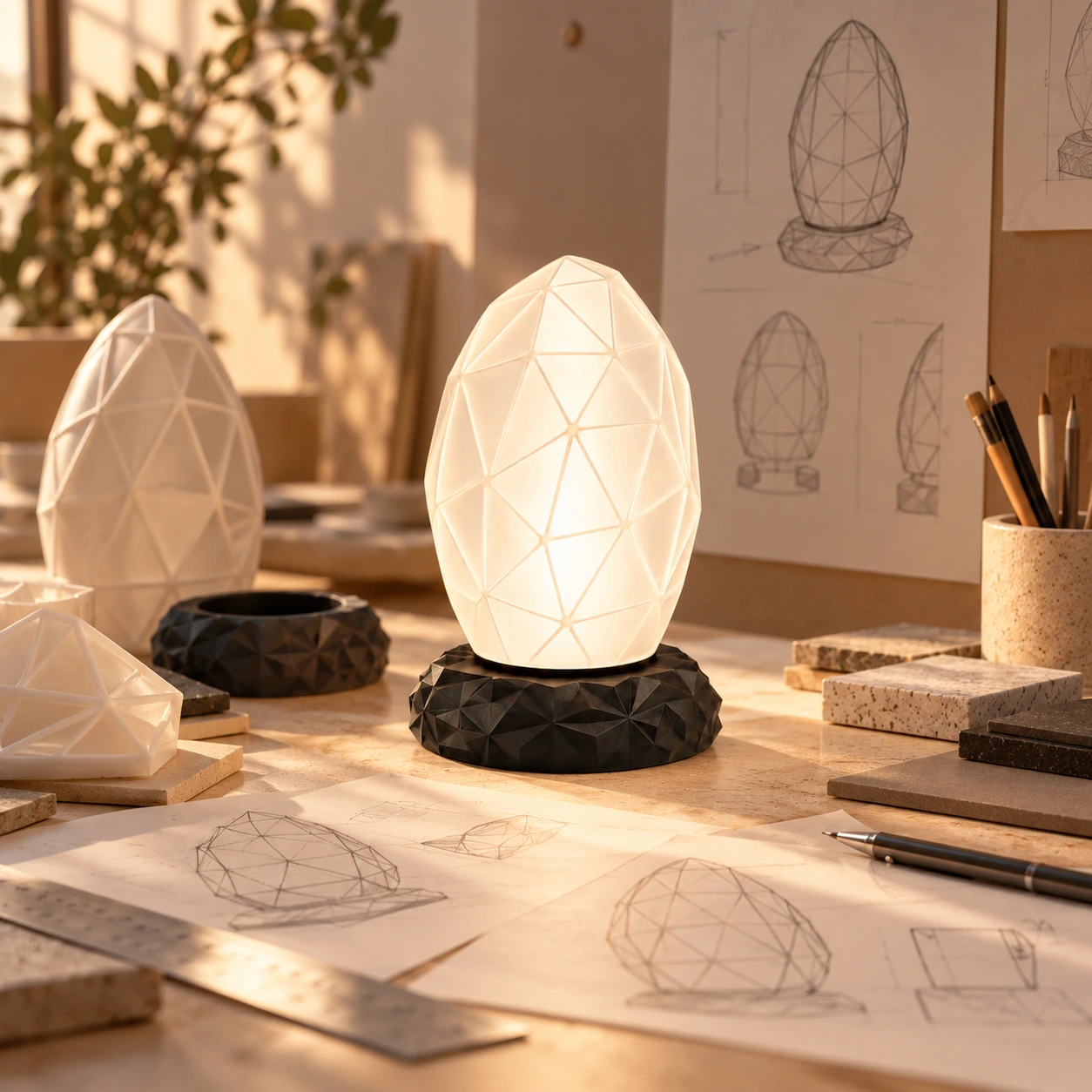
That idea sits at the heart of ORBI, a sculptural 3D-printed ambient lamp developed by UniCreato.
With its softly illuminated geometric shell and contrasting black base, ORBI brings together modern product design, additive manufacturing and ambient lighting. Rather than treating the lamp as a purely functional object, we approached it as something that could contribute to the character of a space.
This is the story of the design thinking behind ORBI, from its distinctive form to the choice of PETG and PLA for its 3D-printed components, and the smart lighting experience inside.
THE IDEA
Can everyday lighting become a sculptural object?
Most of us think about lighting in terms of brightness: whether a room is bright enough to work, read or move around comfortably.
But ambient lighting serves another purpose. It helps create an atmosphere.
A softly illuminated table lamp can make a bedroom feel more restful, add warmth to a living room or bring a welcoming glow to a quiet corner.
For ORBI, the design challenge was to bring those qualities together in an object that felt visually distinctive.
We wanted the lamp to have a recognizable silhouette, an interesting surface and a balanced relationship between its illuminated upper form and its supporting base.
The result is a design that combines an organic overall shape with a structured geometric pattern.
FORM EXPLORATION
Exploring geometry, proportion and texture.
One of ORBI’s most recognizable features is its faceted outer shell.
From a distance, the lamp appears as a softly rounded, elongated form. Look closer, and its surface reveals an interconnected network of triangular geometry.
This contrast between the overall silhouette and the smaller geometric details gives ORBI its character.
The design brings together three important visual elements:
- An organic silhouette: A gently tapered form that feels approachable rather than mechanical.
- Geometric surface detailing: Intersecting triangular lines that create visual rhythm and definition.
- A contrasting base: A dark, low-profile structure that anchors the illuminated shell.
Proportion matters as much as shape. The relationship between the height of the shell and the width of the base influences how balanced the lamp feels.
The aim is not to make the geometry complicated for its own sake. It is to use geometry to give an everyday object a more considered identity.
MATERIAL SELECTION
Why we chose PETG and PLA for ORBI.
Material selection is an important part of designing a 3D-printed lamp. The material affects how the product looks, how it can be manufactured and how its components interact with light.
ORBI uses two different 3D-printing materials for its main exterior components.
PETG for the illuminated shell
The white shell is 3D printed using PETG (polyethylene terephthalate glycol-modified).
PETG is a thermoplastic used in additive manufacturing and is available in translucent formulations. For a lighting product, the material’s optical appearance and the printed wall structure are especially important because they influence how light passes through the shell.
In ORBI, the PETG shell contributes to the lamp’s soft, luminous appearance while allowing its geometric pattern to remain visible.
The material and the form work together: the shell is not simply a cover around the light source, but a defining part of the product’s visual experience.
PLA for the geometric base
ORBI’s black base is 3D printed using PLA (polylactic acid).
PLA is widely used in desktop 3D printing because it can produce detailed shapes with a relatively accessible manufacturing process.
For ORBI, the base has a faceted, low-profile design. Its dark finish contrasts with the glowing shell and provides a strong visual foundation.
Using separate materials for the shell and base also allows each component to be developed around its particular appearance and function.
Material selection alone does not establish electrical or thermal safety. As with any lamp, the final lighting components, operating temperatures and assembly need to be evaluated for their intended use.
LIGHT EXPERIMENTS
How the shell shapes the lighting experience.
The appearance of an ambient lamp depends on more than the light source inside it.
The outer shell plays an equally important visual role.
When light passes through a translucent 3D-printed surface, the material, wall thickness, surface texture and internal geometry can all influence the final appearance.
With ORBI, the illuminated shell creates a gentle glow, while the geometric pattern remains part of the visual composition.
The result is a different experience from a conventional exposed light bulb or a plain cylindrical shade.
During the day, ORBI can be appreciated as a sculptural object. When illuminated, the same geometry takes on a different character as light becomes part of the form.
This relationship between the physical object and the light it produces is central to the design.
Light is not just something we add to a product. It is a material we design with.
— UniCreato Studio
SMART LIGHTING EXPERIENCE
A sculptural object with smart lighting inside.
ORBI’s design extends beyond its physical form. Inside the 3D-printed shell is a Philips smart lighting system controlled through the WiZ app, allowing the lamp’s atmosphere to change with the space around it.
Through smartphone control, users can explore RGB lighting, adjust the light to suit different moods and move between a soft, calming glow and more expressive colours.
With compatible voice-assistant integration, the lighting can also be controlled through supported Amazon Alexa and Google Home setups.
What interests us most is the relationship between the technology and the physical design. The smart lighting provides flexibility, while the PETG shell transforms that light into a distinctive visual experience.
The result is an object designed to be appreciated both for how it looks and how it makes a space feel.
DESIGN & MAKING
From digital geometry to a physical object.
3D printing makes it possible to translate complex digital geometry into physical forms without relying on conventional molds for every design iteration.
For a product such as ORBI, this approach offers a useful connection between design and manufacturing.
The faceted shell and geometric base can be developed as three-dimensional models, with their shapes considered alongside the requirements of the printing process.
The printed surface also becomes part of the final product’s identity. Rather than hiding every indication of how an object was made, additive manufacturing can contribute its own texture and character.
At UniCreato, we see this relationship between design and making as an opportunity to create objects that feel different from conventional mass-produced forms.
ORBI reflects that approach: a product where geometry, materials and manufacturing are connected rather than treated as separate decisions.
FINAL DESIGN
A sculptural ambient lamp for considered spaces.
The finished ORBI combines a softly illuminated white shell with a dark geometric base.
Its compact table-lamp form makes it suitable for placement in different interior settings, including bedside tables, living-room consoles, shelves and personal workspaces.
The warm illuminated appearance complements neutral interiors, while the geometric detailing gives the lamp a distinctive presence. Its smart lighting also makes it possible to change the colour and atmosphere without changing the physical object.
What makes ORBI interesting to us is not any single feature. It is the relationship between the different elements: the silhouette, surface geometry, light diffusion, material contrast, physical proportions and lighting experience.
Together, they create an ambient lighting object that is intended to feel both functional and expressive.
WHAT WE LEARNED
Good product design is about more than appearance.
ORBI represents a simple but important principle in our approach to product development: the decisions behind an object matter just as much as its final appearance.
Choosing a form changes how the product is perceived. Choosing a material changes how it can be manufactured and how it interacts with light. Even the proportions of a base can influence the overall character of a design.
For us, that is what makes product design interesting.
An everyday object becomes an opportunity to explore the relationship between function, form, materials, technology and experience.
And that is the thinking behind ORBI.
FREQUENTLY ASKED QUESTIONS
Is ORBI a 3D-printed lamp?
Yes. ORBI is a 3D-printed ambient lamp featuring a PETG outer shell and a PLA base. Its geometric design is developed around additive manufacturing.
What is the difference between PETG and PLA in ORBI?
ORBI uses PETG for its translucent white shell and PLA for its black geometric base. Each material contributes different visual and manufacturing characteristics to the finished design.
Can ORBI change colours?
Yes. ORBI uses an RGB-capable smart light that can be controlled through the WiZ smartphone app, allowing users to adjust the lighting colour and atmosphere.
Does ORBI support voice control?
ORBI’s WiZ lighting system supports integration with compatible Amazon Alexa and Google Home setups, subject to the installed lighting model and configuration.
What is an ambient lamp used for?
An ambient lamp provides supplementary lighting that helps create a particular atmosphere. It can add warmth, visual interest and a softer lighting experience to a bedroom, living room or other interior space.
EXPLORE ORBI
Discover the ORBI Ambient Lamp.
Explore the design, materials and details of ORBI, our sculptural 3D-printed ambient lamp.
Explore ORBI Lamp →